Plan Your Trip
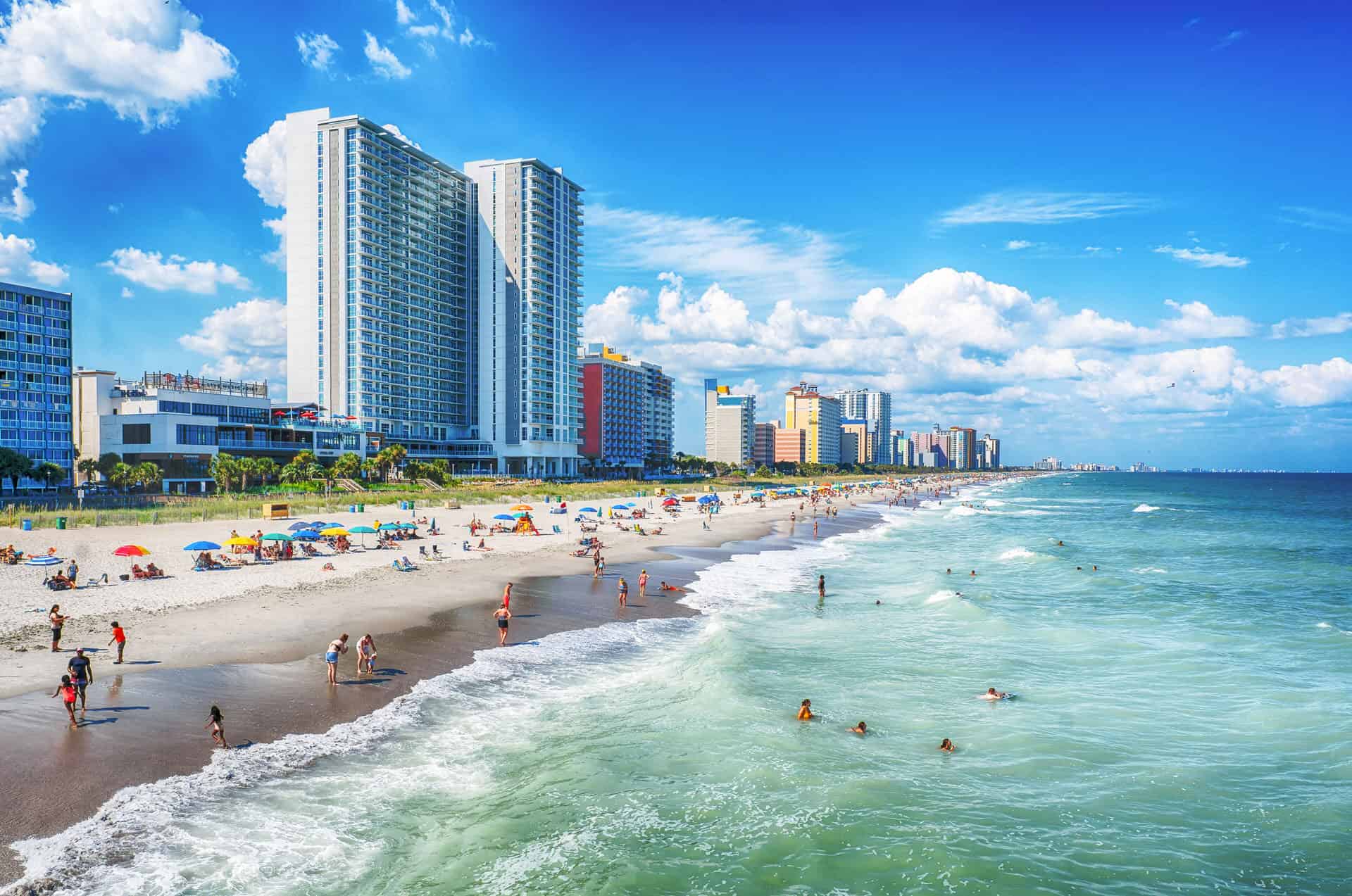
From the lively Myrtle Beach Boardwalk to the pristine untouched sands of Huntington Beach State Park β every stretch of the Grand Strand has its own personality, its own pace, and its own reason to visit.
4 distinct beach communities β click any beach to jump to its profile
North Myrtle Beach is actually four distinct beach communities β Cherry Grove, Ocean Drive, Crescent Beach, and Windy Hill β that consolidated into one city in 1968. Each has its own personality, architecture, and crowd. The 14-mile shoreline here tends to be wider and less congested than the Myrtle Beach strip, and it's the birthplace of the Carolina Shag β South Carolina's official state dance.
Cherry Grove occupies the northernmost point of North Myrtle Beach and is one of the most charming and uncongested stretches of sand on the entire Grand Strand. The beach has two distinct personalities: the ocean side, with wide flat sands and good surf fishing, and the inlet side, where Cherry Grove Inlet connects to a mile of salt marsh and offers a beautiful tidal vista. The famous Cherry Grove Pier extends 985 feet into the Atlantic and has been a fishing institution since the 1950s. The beach is beloved by families and older visitors for its quieter pace, golf cart accessibility, and the absence of high-rise development on the north end. Several public beach access points are available along North Ocean Boulevard, with paid parking near the pier and some free parking in residential side streets.
Ocean Drive is the cultural heart of North Myrtle Beach β the birthplace of the Carolina Shag, South Carolina's official state dance, which was born here in the 1940s among the beach music clubs along Main Street. The area retains a nostalgic, classic beach town feel that sets it apart from the more commercial Myrtle Beach strip. Main Street runs perpendicular to the beach and is lined with shag clubs, bars, restaurants, and casual shops. The OD Pavilion Amusement Park provides family entertainment, and the beach itself is wide and well-maintained. Several public beach access points are located along Ocean Boulevard and the avenues north and south of Main Street, with a mix of free and paid parking options.
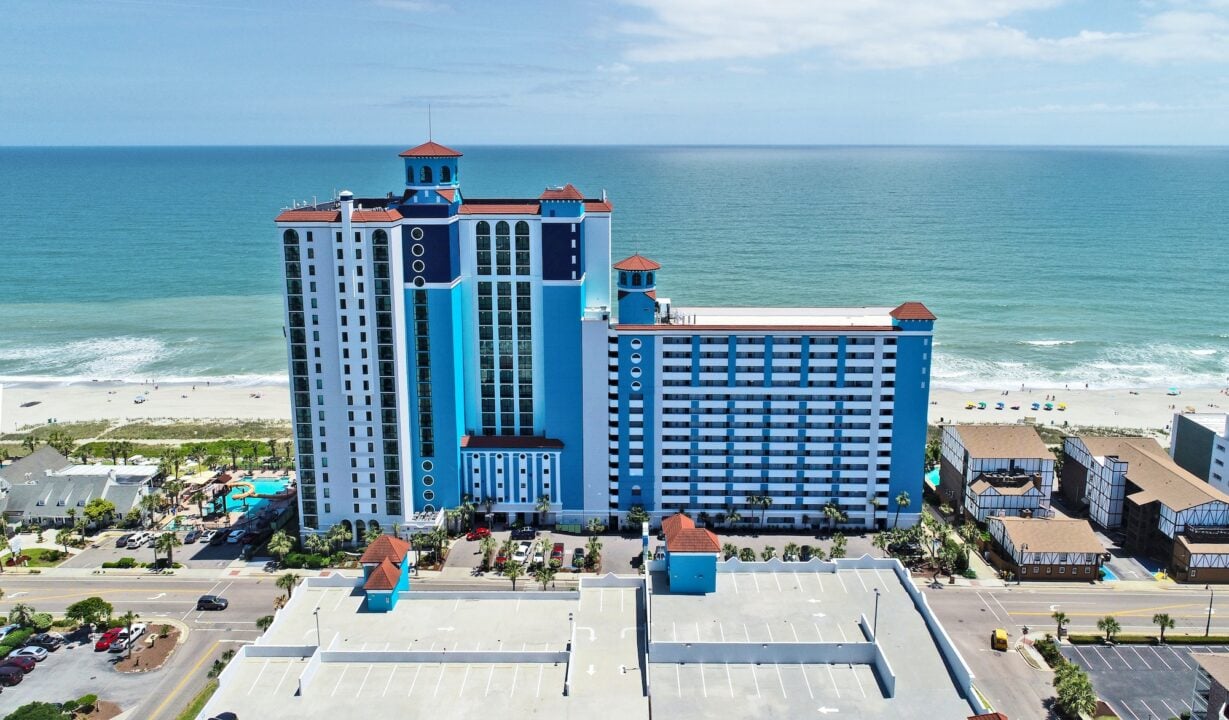
Crescent Beach sits in the center of North Myrtle Beach between Ocean Drive and Windy Hill, and is particularly well suited for visitors who want high-end resort accommodations paired with wide, peaceful sands. The beach here is famously wide at low tide β great for kids to run and play. The area has become increasingly walkable over the years, with bars, beachwear shops, and restaurants within easy reach of the sand. The public access at 17th Avenue South is especially well-regarded for its outdoor showers, bathrooms, and the ability to walk directly from the beach to Molly Darcy's porch for food and drinks. Several luxury resort properties, including North Beach Resort & Villas, are located in this area.
Windy Hill is the southernmost community in North Myrtle Beach, bordered to the south by the Intracoastal Waterway and offering marsh views alongside its Atlantic beaches. Like Cherry Grove on the north end, Windy Hill sits alongside a tidal salt marsh, giving it a scenic, dual-waterway character. The area is best known for its proximity to Barefoot Landing β one of the Grand Strand's finest shopping, dining, and entertainment complexes β which sits directly across the street. North Beach Plantation at 21 Main, Hamburger Joe's, and Joe's Bar & Grill are nearby dining favorites. The beach itself is quieter than Ocean Drive and Crescent, attracting repeat visitors who appreciate the calm atmosphere and Barefoot Landing access.
Myrtle Beach proper encompasses the most energetic, amenity-rich stretch of the Grand Strand. From the iconic 1.2-mile Boardwalk to the quieter residential Golden Mile on the north end and the laidback Shore Drive area, Myrtle Beach offers more variety within its own borders than most beach destinations offer across their entire coastline. Parking in the city is $3/hour at beach accesses (MarchβOctober, 9 AMβmidnight). Free from November through February.
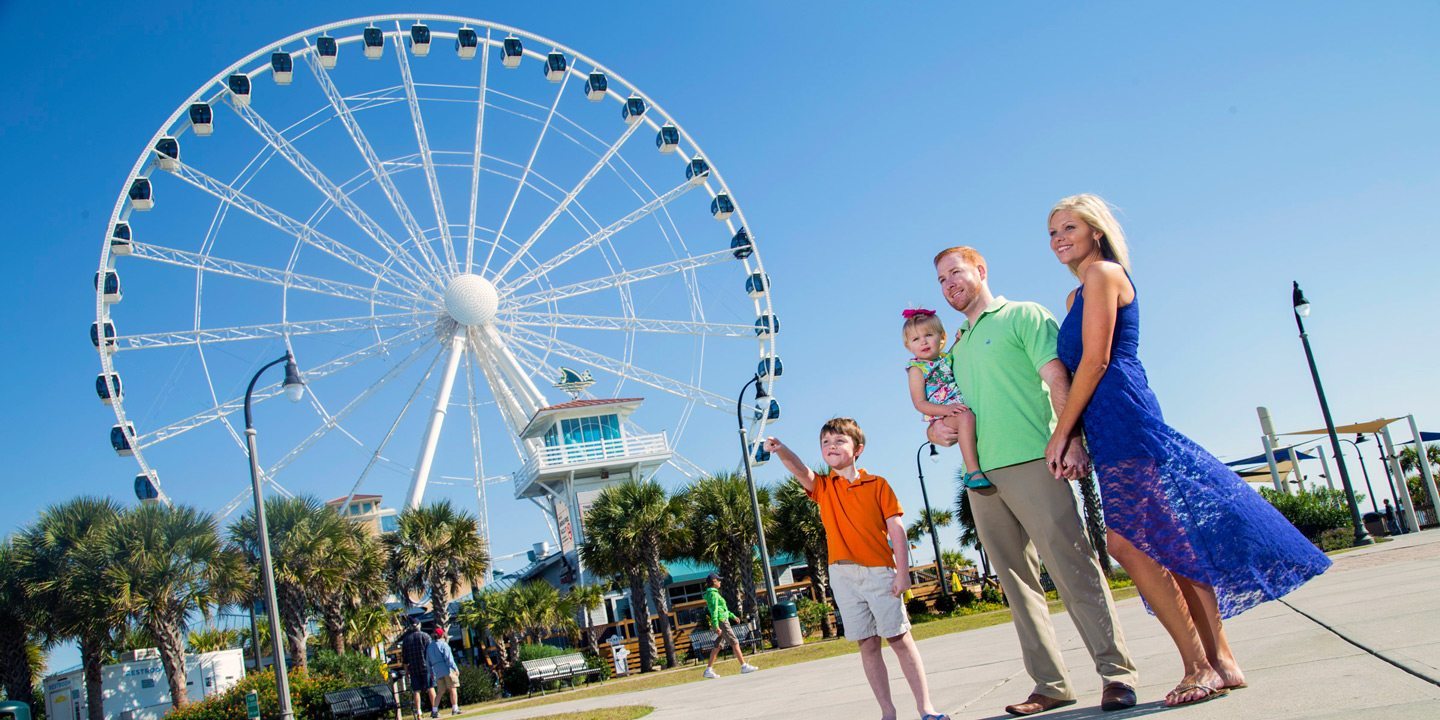
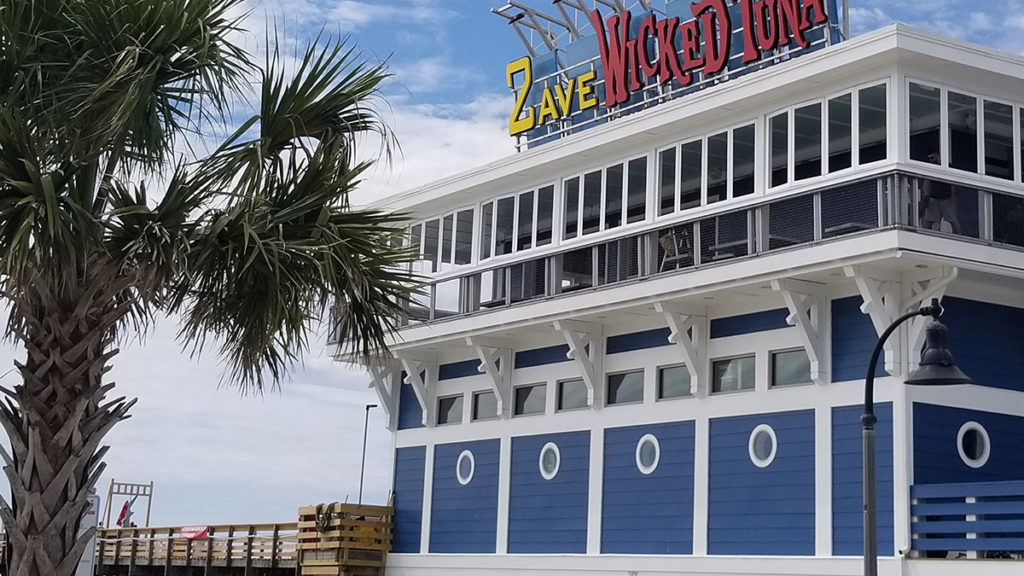
The Myrtle Beach Boardwalk is the undisputed heart of the Grand Strand β a 1.2-mile oceanfront promenade stretching from 2nd Avenue Pier in the south to the SkyWheel and Pier 14 in the north. Every step brings something new: souvenir shops, seafood restaurants, entertainment venues, ice cream stands, bars, and live music. The beach fronting the boardwalk is wide and well-maintained, with direct access at multiple points. The SkyWheel towers 200 feet above the promenade, and 2nd Avenue Pier is home to Wicked Tuna's celebrated oceanfront dining. This is peak Myrtle Beach β lively, crowded during peak season, and absolutely electric after dark. Paid parking is available in city garages and metered spaces along Ocean Boulevard.
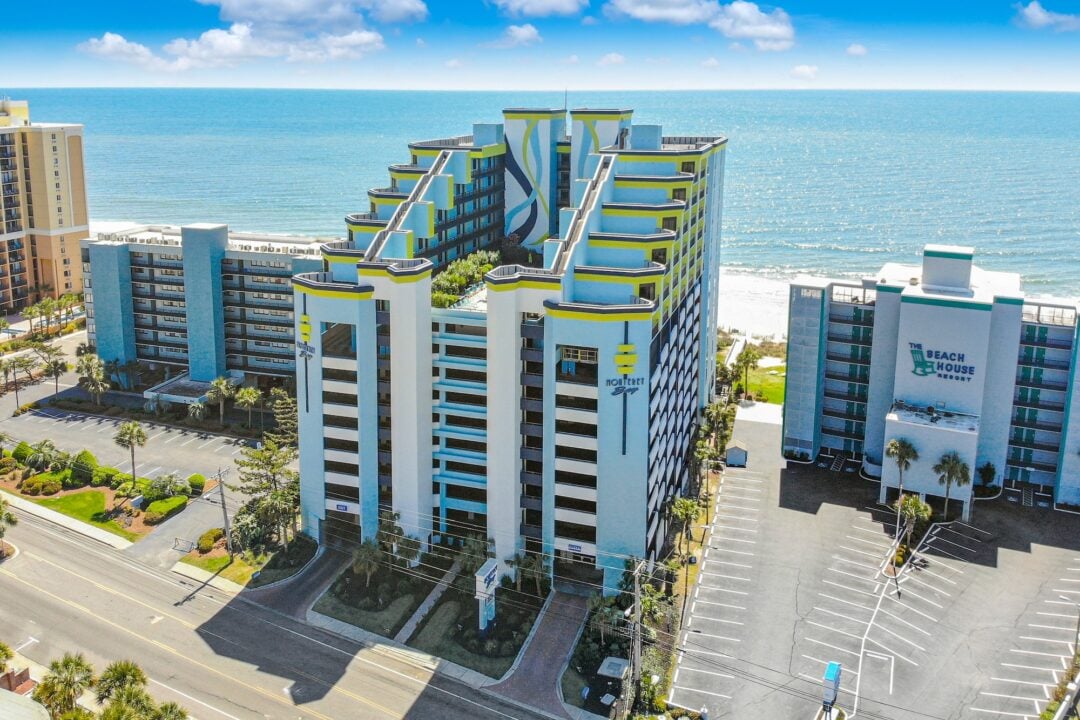
The Golden Mile refers to the prestigious residential stretch of North Ocean Boulevard between 48th and 82nd Avenues North β an area where private beach houses and upscale resorts like Monterey Bay Suites, Dunes Village, and Grande Shores line a section of Myrtle Beach's most beautiful and uncrowded oceanfront. Wide, pristine sands and a noticeably quieter atmosphere set this stretch apart from the bustling downtown strip. Several of Myrtle Beach's most celebrated resort properties are located here, and the beach quality β width, cleanliness, and crowd level β is consistently rated among the best in the city. Public access is available at several avenues with street parking available.
Shore Drive is one of the best-kept secrets among Myrtle Beach insiders β a tree-lined oceanfront road that feels like a coastal neighborhood rather than a tourist destination. Located off North Kings Highway between the Golden Mile and North Myrtle Beach, the Arcadian Shores area delivers wide, uncrowded sands, excellent resort choices (including Sands Ocean Club, Sand Dunes, and Sea Watch Resort), and the legendary Apache Pier β at 1,206 feet, one of the longest oceanfront piers on the East Coast. The Sands Resorts complex here includes Ocean Annie's Beach Bar, one of the most celebrated oceanside live music venues in the South. Five public beach access points are maintained by Horry County along Shore Drive.
Myrtle Beach State Park is a 312-acre maritime forest and beach preserve on the southern end of the city β a genuine oasis of nature just minutes from the busiest tourist corridor in the Southeast. The park protects one of the last remaining pieces of maritime shrub thicket in South Carolina, and its beaches are among the cleanest and least crowded in the Myrtle Beach area. The park features hiking and biking trails through the maritime forest, a freshwater fishing pond, a nature center with live wildlife, a fishing pier, and campsites for tent and RV camping. Day admission is $5 per adult, $3 for ages 6β15, and children under 5 are free. The park is open year-round from 6 AM to 10 PM.
The South Strand β encompassing Surfside Beach and Garden City β offers a noticeably quieter, more family-oriented beach experience just south of Myrtle Beach city limits. Surfside Beach has earned a national reputation as "The Family Beach," and Garden City blends classic pier culture with small-town Southern charm. Parking is free year-round at Horry County beach access points in both communities.
Surfside Beach has proudly worn the nickname "The Family Beach" for decades, and it lives up to it in every way. The town is small, clean, and genuinely oriented toward families β there are no high-rise resort towers here, just cottages, small hotels, and a peaceful beach atmosphere that puts kids and parents at ease. Surfside is one of the nation's first certified autism-friendly beaches, a distinction it has held for over a decade, and the community works hard to maintain accessible, accommodating beach access for visitors of all abilities. The rebuilt Surfside Beach Fishing Pier is the hub of the beach area, surrounded by restaurants and live music venues in the Pier Village. The water is calm and the beach is wide and flat β ideal for young swimmers.
Garden City Beach is one of the most beloved classic beach communities on the South Strand β a small, unincorporated community that blends small-town Southern rhythm with authentic pier culture. The Pier at Garden City is the anchor of the community, drawing anglers and sunbathers alike to the southern end of the beach. Atlantic Avenue, which runs parallel to the waterfront, offers free parking along the roadside and provides easy access to the sand. Garden City has maintained its unpretentious, down-to-earth character even as neighboring communities have grown, and this authenticity is exactly what keeps its loyal visitors coming back generation after generation. Horry County maintains all beach access points along Garden City and provides free year-round parking at oceanfront lots.
The Hammock Coast β encompassing Murrells Inlet, Litchfield Beach, Pawleys Island, and Huntington Beach State Park β is the quieter, more naturally beautiful counterpart to the Grand Strand's busy northern beaches. This is where live oaks drape Spanish moss over the marshes, where beach cottages outnumber resort towers, and where the pace of life drops noticeably slower. It's the South Carolina coast as it was meant to be experienced.
Murrells Inlet is less a beach community and more a seafood and waterfront dining destination β often called the "Seafood Capital of South Carolina." The main draw is the MarshWalk, a half-mile boardwalk overlooking the salt marshes and inlet where a dense concentration of waterfront restaurants, bars, and live music venues creates one of the most vibrant dining scenes on the entire Grand Strand. While Murrells Inlet doesn't have direct Atlantic Ocean beach access, Garden City Beach is a 5-minute drive, and the inlet itself offers beautiful water views, boat tours, kayaking, and crabbing. The Wicked Tuna's original location here is one of the most acclaimed seafood restaurants in South Carolina. Parking along the MarshWalk is free and informal.
Huntington Beach State Park offers what many consider the best-preserved and most pristine beach on the entire Grand Strand β over 3 miles of Atlantic shoreline with no hotels, no condos, and no commercial development in sight. The 2,500-acre park adjacent to Brookgreen Gardens encompasses freshwater lagoons, saltwater marshes, maritime forest, and beach that represent outstanding examples of South Carolina's natural coastal environment. The park is home to over 300 bird species, making it one of the Southeast's premier birding destinations. Atalaya, the historic Moorish-style winter home of philanthropists Archer and Anna Hyatt Huntington, sits within the park and is open for tours. The beach is seasonally lifeguarded, and camping is available from $17/night.
Litchfield Beach is a wide-open, serene stretch of Atlantic coastline just south of Huntington Beach State Park and north of Pawleys Island β ideally positioned for visitors who want peaceful, uncrowded sands without paying for a state park admission. The beach is built for long walks and quiet afternoons; the sands are wide and flat, the crowds thin even in peak season, and the pace is genuinely unhurried. Public parking is available at select access points including Norris Drive and South Waccamaw Drive. The Litchfield Beach & Golf Resort is the primary accommodations hub, offering a full resort experience with golf, pools, and direct beach access. Scenic bike paths connect toward Pawleys Island and Huntington Beach State Park.
Pawleys Island is one of the oldest resort communities on the entire East Coast and wears its age as a badge of honor. The island's famous unofficial motto β "arrogantly shabby" β captures the spirit of a place that has deliberately resisted commercialization for over 200 years. The barrier island itself is narrow and 4 miles long, lined with historic beach cottages, many of which have been in the same families for generations. Rock jetties along the shoreline create calm wading pockets that are ideal for young children. Eight public access points on the island offer a combined total of approximately 150 parking spaces. The Pawleys Island experience is the antidote to everything overcommercialized about American beach culture β and locals here wouldn't have it any other way.